
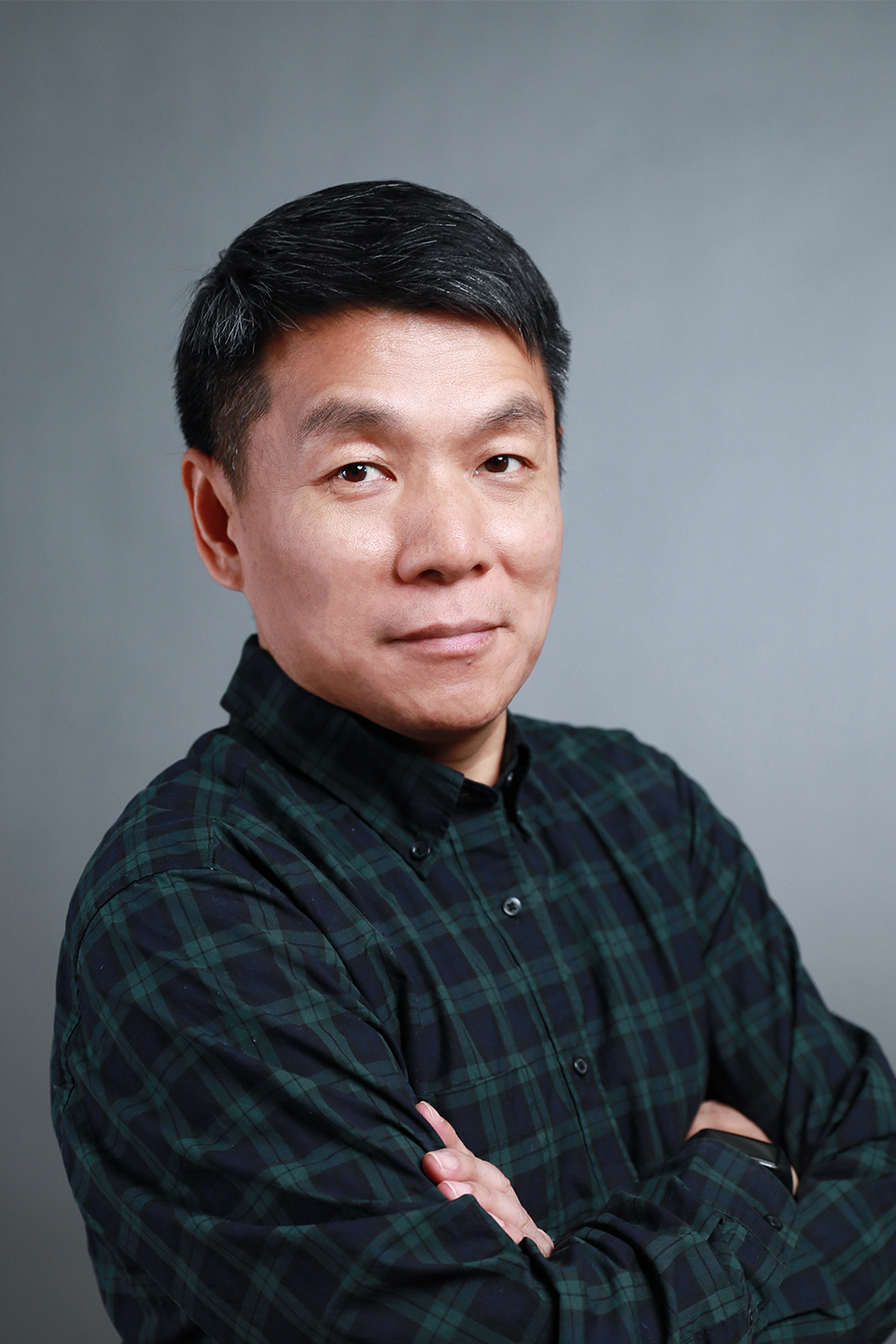
叶一泓
北京大学医学部:1990-1995、医学学士
宾夕法尼亚大学: 1995-2000, 分子生物学博士
2000-2005 哈佛医学院 博士后
2005-2012 美国国立卫生研究院 准长聘研究员
2012-2026 美国国立卫生研究院 资深研究员
2026-至今 北京脑科学与类脑研究所 特聘研究员
叶一泓实验室长期从事蛋白质与细胞器稳态调控的研究。细胞通过对蛋白折叠的调控以及对错误构象蛋白的清除来有效维持细胞器,细胞和机体的稳态。 一旦这一平衡被打破, 错误折叠蛋白的累积会产生大量有害聚集体。 这些聚集体不仅会对产生它们的细胞造成伤害,它们甚至可以在细胞间以类似朊蛋白的形式传播,并在此过程中对机体,尤其是含有膜结构的细胞器造成损伤。目前证据显示,有害蛋白在神经元包间的传播是驱动所有神经退行性疾病的主要外因之一。
叶一泓实验室主要关注神经毒性蛋白聚集体在细胞间转运的分子机制以及此过程对溶酶体和其他细胞器造成的损伤,并探寻有效抑制神经毒性蛋白在脑组织内传播的方法。
主要研究的有以下几个方向:
1. 溶酶体膜损伤对细胞间alpha-突触核蛋白传播的影响以及泛素参与修复溶酶体膜损伤的机理。
2. 建立以溶酶体膜损伤为基础的帕金森氏症小鼠模型并探索药物筛干预的可行性
3. 探索神经元释放alpha-突触核蛋白聚集体的分子机理。
2023 NCATS Director’s Award
2014 The NIH APAO Outstanding Scientific Achievement award
2001-2004 Helen Hay Whitney fellowship.
2001 Leukemia & Lymphoma society fellowship, 2001 (award declined)
2014 Finalist, the Larry Sandler award, 42nd Annual Drosophila Research Conference, Washington D.C., 2001
2001 Saul Winegrad MD Outstanding Thesis Award, University of Pennsylvania, 2001
1. Chin, N., Zhang, Q., Zou, J. Cheng, K., Zheng, W. Ye, Y. (2026) Nuclear export governs TDP-43 phase transitions and cytoplasmic aggregation. eLIFE https://elifesciences.org/reviewed-preprints/110172
2. Lee, J., Zou, J., Binti Mazli, W., Chin, N., Jarnik, M., Saidi, L., Xu, Y., Replogle, J., Ward, M., Bonifacino, J., Zheng, W., Hao, L., Ye, Y. (2025) CHIP protects lysosomes from CLN4 mutant-induced membrane damages. Nat. Cell Biol. 27:1465-1481.
3. Chen, R.H., Costa-Filho, A.J., Debnath, J., Galli, T., Ge, L., Goberdhan, D., Guo, W., He, K., Jacob, R., Kang, T., Lee, M.G., Li, L., Lolicato, F., Lu, J., Malhotra, V., Nickel, W., Nikoletopoulou, V., Ogden, S.K., Sagia, G.M., Shao, F., Shi, A., Thery, C., Vérollet, C., Villeneuve, J., Verweij, F., Wang, Y., Wang, J., Wu, S., Ye, Y.*, Yin, H., Yu, L., Zhang, M., Zhang, Y., Zhou, X., Zurzolo, C. (2025) Beyond the secretory pathway: New insights into protein release. Traffic e70022. doi: 10.1111/tra.70022.
4. Ennis, M., Wang, L., Saidi, L., Xu, Y., Ye, Y. (2025) NEMF-mediated CAT tailing facilitates translocation-associated quality control. J. Cell Biology 224 (6): e202408199.
5. Wang, L., Xu, Y., Saidi, L., Fukushige, T., Wang, X., Lee, J.-G., Krause, M., Huang, L., Ye, Y. (2024) Mono-UFMylation promotes misfolding-associated secretion of α-synuclein. Science Adv., 10(11):eadk2542.
6. Zhang, Q, Tang, W.C., Stancanelli, E., Jung, E., Syed, Z., Pagadala, V., Saidi, L., Chen, C.Z., Gao, P., Xu, M., Pavlinov, I., Li, B., Huang, W., Chen, L., Liu, J., Xie, H., Zheng, W., Ye, Y. (2023) Heparan sulfate promotes ACE2 super-cluster assembly to enhance SARS-CoV-2-associated syncytium formation. Nat. Commun., 14(1): 5777. Doi: 10.1038/s41467-023-41453-w.
7. Wang, L., Xu, Y., Yun, S., Yuan, Q., Satpute-Krishnan, P., Ye, Y. (2023) SAYSD1 senses UFMylated ribosome to safeguard co-translational protein translocation at the endoplasmic reticulum. Cell Rep., 42: (1):112028. doi: 10.1016/j.celrep.2023.
8. Lee, J., Xu, Y., Xu, M., Saidi, L., Zheng, W., Ye, Y. (2023) Abnormal sorting of misfolded proteins by neuronal ceroid lipofuscinosis-associated DNAJC5/CLN4 mutants causes lipofuscin accumulation. Autophagy, 4:1-20. doi: 10.1080/15548627.2022.2065618.
9. Wang, P., Ye, Y. (2021) An integrin receptor complex mediates Tau fibril-dependent activation of primary astrocytes. Nat. Commun. 12(1):95. doi: 10.1038/s41467-020-20322-w.
10. Zhang, Q, Chen, Z.C., Swaroop, M., Xu, M., Wang, L., Lee, J., Wang, A.Q., Pradhan, M., Hagen, N., Chen, L., Shen, M., Luo, Z., Xu, X., Xu, Y., Huang, W., Zheng, W., Ye, Y. (2020) Heparan sulfate assists SARS-CoV-2 in cell entry and can be targeted by approved drugs in vitro. Cell Discov. 6(1): 80. doi: 10.1038/s41421-020-00222-5.
11. Zhang, Q., Xu, Y., Lee, J., Jarnik, M., Wu, X., Bonifacino, J.S., Shen, J., Ye, Y. (2020) A Myosin-7B dependent endocytosis pathway mediates cellular entry of α-Synuclein fibrils and polycation-bearing cargos. Proc. Natl. Acad. Sci. USA. 117: 10865-10875.
12. Wang, L., Xu, Y., Rogers, H., Saidi, L., Noguchi, C.T., Li, H., Yewdell, J.W., Guydosh, N., Ye, Y. (2020) UFMylation of RPL26 links translocation-associated quality control to endoplasmic reticulum protein homeostasis. Cell Res. 1: 5-20, doi: 10.1038/s41422-019-0236-6.
13. Xu, Y., Cui, L., Dibello, A., Wang, L., Lee, J., Saidi, L., Lee, J.G., Ye, Y. (2018) DNAJC5 facilitates USP19-dependent unconventional secretion of misfolded cytosolic proteins. Cell Discov. 4:11 doi: 10.1038/s41421-018-0012-7.
14. Lee, J.G., Takahama, S., Zhang, G., Tomarev, S., Ye, Y. (2016) Unconventional secretion of misfolded proteins promotes adaptation to proteasome dysfunction in mammalian cells. Nat. Cell Biol. 18:765-776. doi: 10.1038/ncb3372.
15. Liu, Y., Soetandyo, N., Lee, J.G., Liu, L., Xu, Y., Clemons, W.M. Jr., Ye, Y. (2014) USP13 antagonizes gp78 to maintain functionality of a chaperone in ER-associated degradation. eLIFE, 3:e01369. doi: 10.7554.
16. Christianson, J.C. and Ye, Y. (2014) Cleaning up in the endoplasmic reticulum: ubiquitin in charge. Nat. Struct. & Mol. Biol., 21: 325-335.
17. Lee, J.-G., Soetandyo, N., Baek, K., Ye, Y. (2013) Reversible inactivation of deubiquitinases by reactive oxygen species in vitro and in cells. Nature Commun., 4:1568. doi: 10.1038/ncomms2532.
18. Xu, Y., Cai, M., Yang, Y., Huang, L., Ye, Y. (2012) SGTA recognizes a non-canonical ubiquitin-like domain in the Bag6-Ubl4A-Trc35 complex to promote ER-associated degradation. Cell Rep. 2: 1633-1644.
19. Ramanathan H. N., Ye, Y. (2012) The p97 ATPase associates with EEA1 to regulate the size of early endosomes. Cell Res. 22: 346-359.
20. Wang, Q., Liu, Y., Soetandyo, N., Baek, K., Ramanujan, H., Ye, Y. (2011) A ubiquitin ligase-associated chaperone holdase maintains polypeptides in soluble states for proteasome degradation. Mol. Cell 42: 758-770.
21. Li, W., Tu, D., Li, L., Wollert, T., Ghirlando, R., Brunger, A.T.*, Ye, Y.* (2009) Mechanistic insights into active site-associated polyubiquitination by the ubiquitin conjugating enzyme Ube2g2. Proc. Natl. Acad. Sci. USA. 106, 3722-3727.
22. Ye, Y.* and Rape, M.* (2009) Building polyubiquitin chains: E2 at work. Nat. Rev. Mol. Cell Biol. 11, 755-764.
23. Wang, Q., Mora-Jensen, H., Weniger, M.A., Perez-Galan, G., Wolford, C., Hai, T., Ron, D., Chen, W., Trenkle, W., Wiestner, A.*, Ye, Y.* (2009) ERAD inhibitors integrate ER stress with an epigenetic mechanism to activate BH3 only protein NOXA in cancer cells. Proc. Natl. Acad. Sci. USA. 106, 2200-2205.
24. Li, W., Tu, D., Brunger, A.T., and Ye, Y. (2007) A ubiquitin ligase transfers preformed polyubiquitin chains from a conjugating enzyme to a substrate. Nature 446, 333-337.
25. Ye, Y., Shibata, Y., Kikkert, M., Voorden, S., Weirdz, E., and Rapoport, T.A. (2005) Recruitment of the p97 ATPase and ubiquitin ligases to the site of retro-translocation at the ER membrane. Proc. Natl. Acad. Sci. USA. 102, 14132-14138.
26. Ye, Y., Shibata, Y., Yun, C., Ron, D., and Rapoport, T.A. (2004) A membrane protein complex mediates retro-translocation from the ER lumen into the cytosol. Nature 429, 841-847.
27. Ye, Y., Meyer, H.H., and Rapoport, T.A. (2003) Function of the p97-Ufd1-Npl4 complex in retro-translocation from the ER to the cytosol: dual recognition of non-ubiquitinated polypeptide segments and poly-ubiquitin chains. J. Cell Biol. 162, 71-84.
28. Ye, Y., Meyer, H., and Rapoport, T.A. (2001) The AAA ATPase Cdc48/p97 and its partners transport proteins from the ER into the cytosol. Nature 414, 652-656.
29. Ye, Y., and Fortini, M. E. (1999) Apoptotic activity of wild-type and Alzheimer's disease-related mutant Presenilins in Drosophila. J. Cell Biol. 146, 1351-1364.
30. Ye, Y., Lukinova, N., and Fortini, M. E. (1999) Neurogenic phenotypes and altered Notch processing in Drosophila Presenilin mutants. Nature 398, 525-529.