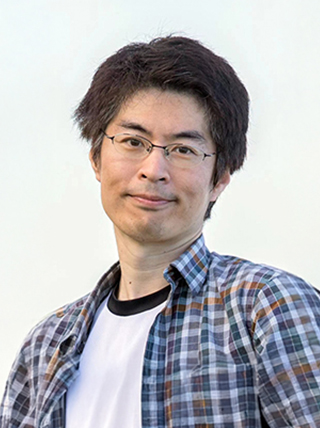
Shogo Ohmae
2008年 医学博士,日本順天堂大学
2004年 医学硕士,日本京都大学
2024年- 北京脑所研究所研究员,北京
2018年-2024年 美国贝勒医学院神经科学系助理教授
2015年-2017年 贝勒医学院神经科学系博士后研究员(导师: Javier F. Medina)
2012年-2015年 宾夕法尼亚大学心理学系博士后研究员(导师: Javier F. Medina)
2009年-2012年 北海道大学医学院博士后研究员(导师: Masaki Tanaka)
即使最复杂的人类认知功能,如语言处理,也需要追溯到神经回路及其计算。然而,我们目前对于高级认知功能背后的回路计算知之甚少。为了解决这一差距,我们旨在在动物大脑中记录大规模的神经元活动,尽管大脑只处理语言的特定方面。然后,我们旨在创造模仿真实大脑回路的人工智能电路,以复现大脑中信息的流动和转换。通过这种跨学科方法,我们将发掘大脑认知处理的计算机制,提高科研认知的水平。我相信动物实验和计算机建模的结合是未来神经科学突破的关键。
更详细地说,我们的目标是:
1.使用高密度多通道电极(Neuropixels)和钙成像(Miniscope)从清醒动物(小鼠/猴子)认知任务过程中记录大规模的神经元活动。
2.创造人工神经网络(ANN)模型,实现大脑回路和功能(输入-输出)的生物学知识,以揭示大脑认知处理背后的计算机制。
3.深入了解诸如自闭症等神经障碍的病理机制,这些障碍源于这一网络发育的异常。
4.创建类脑人工智能电路,给大脑机器接口(BMI)和人工智能的发展提供指导。
我们的实验室使用这种高度跨学科的方法。实验室的第一篇论文(发表在2024年的《自然通讯》上)展示了这种方法的潜力。这篇论文描述了小脑的人工神经网络模型,提出了一个统一理解小脑两种语言功能的框架,这两种功能以前被认为是建立在不同机制之上的。
欢迎有兴趣的学生、学者和博士后与我们联系,申请相关职位。无论您的背景是实验科学还是人工智能建模,您的贡献都将受到高度重视和欢迎。欲了解更多信息,请联系shogo@cibr.ac.cn。
2020年-2024年 国立卫生研究院/国立神经疾病和中风研究所(NIH/NINDS)R34规划补助金的首席研究员
2014年-2015年 日本学术振兴会(JSPS)海外博士后研究员
2013年 上原纪念基金会海外研究奖学金
2009年-2012年 JSPS青年科学家研究员(PD)
2006年-2008年 JSPS青年科学家研究员(DC2)
Selected publications:
1. Ohmae K. Ohmae S.* (2024) Emergence of syntax and word prediction in an artificial neural circuit of the cerebellum. Nature Communications. 15, 927. (Selected for a featured article in Nat Commun)
2. Ohmae S.*, Ohmae K., Heiney S., Subramanian D., Medina J.F.* (2021) A recurrent circuit links antagonistic cerebellar modules during associative motor learning. bioRxiv. [Preprint]
3. Kawato M.†, Ohmae S.†, Hoang H., Sanger T. (2021) 50 years since the Marr, Ito, and Albus models of the cerebellum. Neuroscience. 462:151-174. [Review]
4. Kim O.A., Ohmae S., Medina J.F. (2020) A cerebello-olivary signal for negative prediction error is sufficient to cause extinction of associative motor learning. Nature Neuroscience. 23(12):1550-1554.
5. Ohmae S.*, Kunimatsu J., Tanaka M.* (2017) Cerebellar Roles in self-timing for sub- and supra-second intervals. Journal of Neuroscience. 37(13):3511-3522.
6. Ohmae S.*, Tanaka M.* (2016) Two different mechanisms for the detection of stimulus omission. Scientific Reports. 6:20615.
7. Ohmae S., Medina J.F. (2015) Climbing fibers encode a temporal-difference prediction error during cerebellar learning in mice. Nature Neuroscience. 18(12):1798-803.
8. Ohmae S.*†, Takahashi T.†, Lu X.†, Nishimori Y., Kodaka Y., Takashima I., Kitazawa S.* (2015) Decoding the timing and target locations of saccadic eye movements from neuronal activity in macaque oculomotor areas. Journal of Neural Engineering. 12(3):036014.
9. Ohmae S., Uematsu A., Tanaka M. (2013) Temporally specific sensory signals for the detection of stimulus omission in the primate deep cerebellar nuclei. Journal of Neuroscience. 33(39):15432-41.
10. Ohmae S., Lu X., Takahashi T., Uchida Y., Kitazawa S. (2008) Neuronal activity related to anticipated and elapsed time in macaque supplementary eye field. Experimental Brain Research. 184(4):593-8.
11. Ohmae S., Takemoto-Kimura S., Okamura M., Adachi-Morishima A., Nonaka M., Fuse T., Kida S., Tanji M., Furuyashiki T., Arakawa Y., Narumiya S., Okuno H., Bito H. (2006)Molecular identification and characterization of a family of kinases with homology to Ca2+/calmodulin-dependent protein kinases I/IV. Journal of Biological Chemistry. 281(29):20427-39.
(* denotes corresponding author, † denotes equal contribution)